Ensemble Building
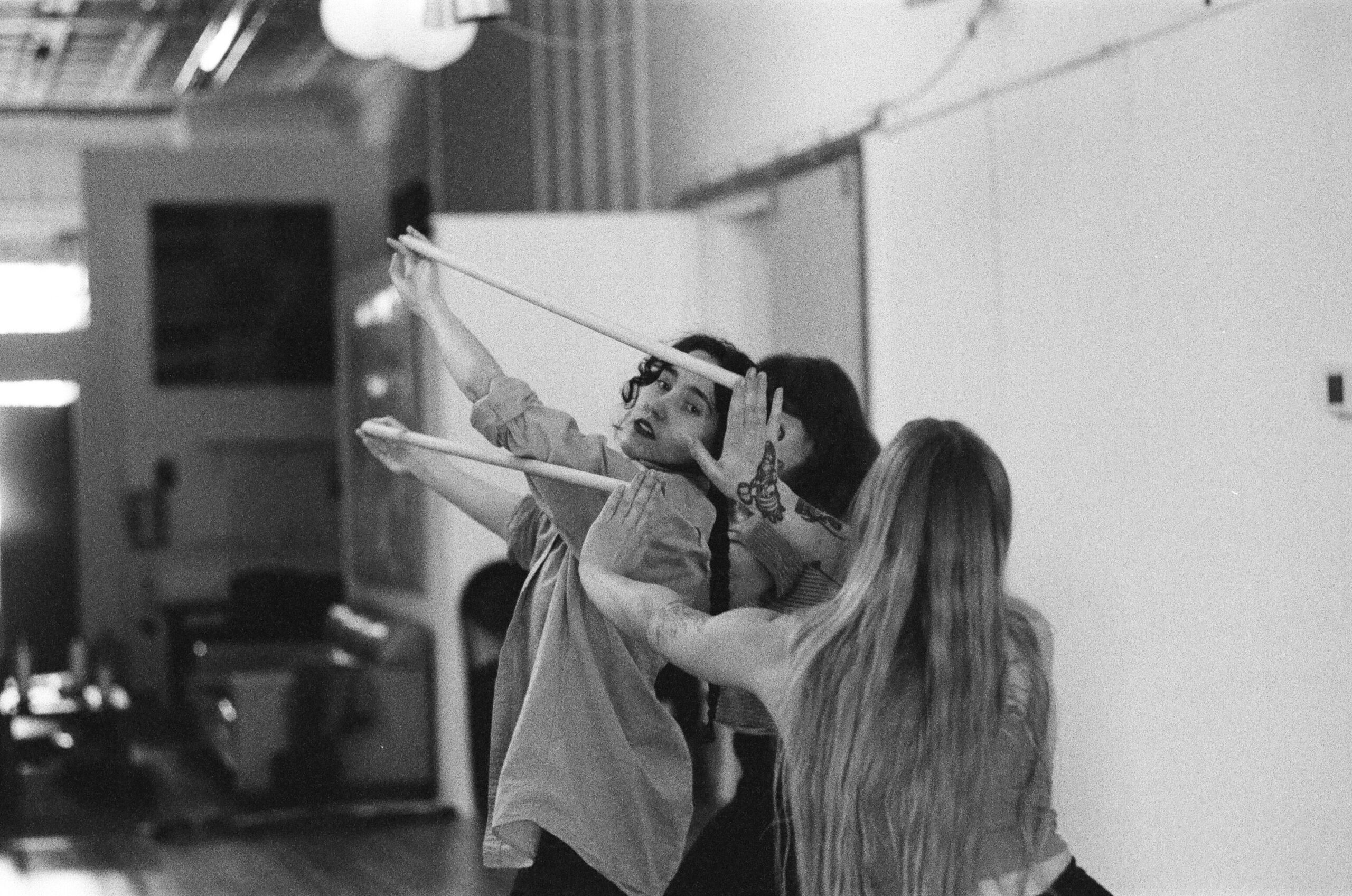
With tools sourced from the worlds of dance, experimental and devised theatre, clown, and the Elizabethan stage itself, as well as communication and self-advocacy tools drawn from non-violent communication and intimacy coordination practices, Mairi empowers ensembles to be bold, connected, adaptable, compassionate, and self-supporting. Whether over the course of a single workshop or a full length, ensemble-led process inspired by historical performance practices, Mairi will guide performers through creating shared movement languages (including the specific languages of intimacy, violence, and death), chemistry work, and story-telling approaches. Vulnerability is fostered with a focused eye to consent and care, and without the need to bare one’s trauma.
While this work was specifically developed for producing Shakespeare and other 16th/17th century western drama, a workshop of these tools will benefit any ensemble seeking to deepen their ability to tune to and support each other. Mairi’s ensemble building workshops have also brought joy and interconnection to non-theatrical workplaces and social gatherings.
Show Facilitation
The historically-inspired ensemble show process is an ever-evolving exploration of raising Shakespeare’s plays. We approach with curiosity how he and his company would have raised their shows in the late 1500s and early 1600s, and how it would feel to do so. Actors worked without a director, relying on clues woven into the text and their strength as an ensemble, raising shows in very short spans of time. Often shows would open after just one read-through and a few days to set fights and dances.
Shakespeare’s company worked together for years, and had the advantage of knowing each other incredibly well. To foster this familiarity and mutual support, the contemporary ensemble building tools used have been curated to connect actors to each other, to authenticity, and to their bodies. This enables them to trust each other and their instincts while navigating the stage in ways that support the story without the need for each moment to be set.
The term “facilitator” is preferred to distance from the contemporary concept of a director, and bring focus to making creative and story-telling choices as a collective. The facilitator moderates and processes the needs of the room, while providing scaffolding and structure to the performance and story adapted to the ensemble’s instincts. The facilitator usually participates from inside the process as a fellow performer in a non-leading role to enable a more sensitive tuning to a specific ensemble’s dynamic, but the process can be adapted and implemented differently if need be. Co-Facilitation is also common, to provide multiple avenues for outside eyes and concern navigation.
Shakespeare is often seen as stuffy or stagnant; the purpose of this process is to invite modern audiences and performers to experience these vibrant plays inhabited in the deeply alive way they were written to be.
Rehearsals may take place over the course of one day or up to approximately two weeks, with a performance run of any span, depending on available schedule and intended tone and result. Please feel free to reach out with any questions and for more information on this unique and thrilling show-raise process.
Services
- Historically-Inspired Shakespearean Facilitation
- Shakespearean Bar/Restaurant Performance or Staged Reading Facilitation/Direction
- Ensemble Building Workshop (Class Length, One Day, or Multi Day)
- Ensemble-Led Show-Raise Facilitation